
Cursed house Multiplayer(GMM)
SUSSY BAKA DEVRole Playing
4.2372.00 Reviews
- Version
- 1.7.4
- Installs
- 10.00M
- Age Rating
- Everyone 10+
Screenshots
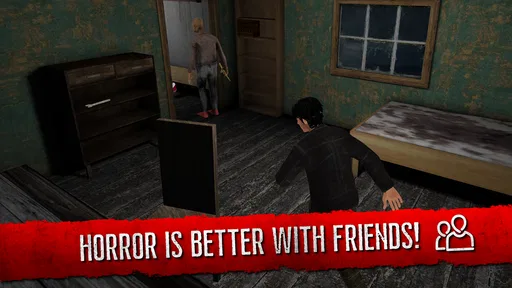
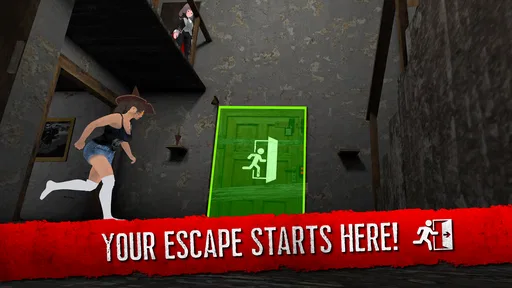
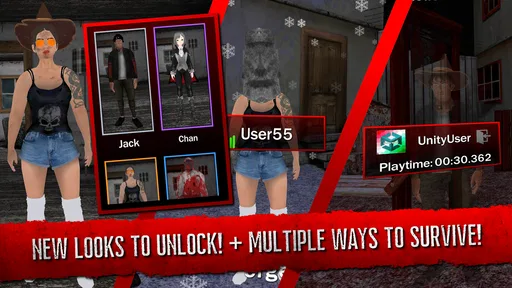
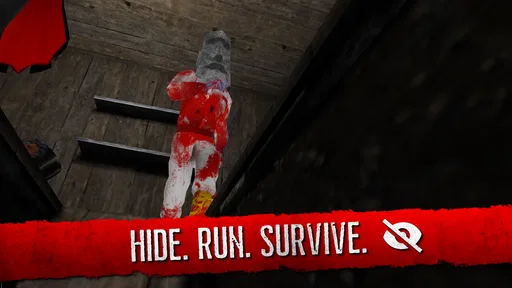
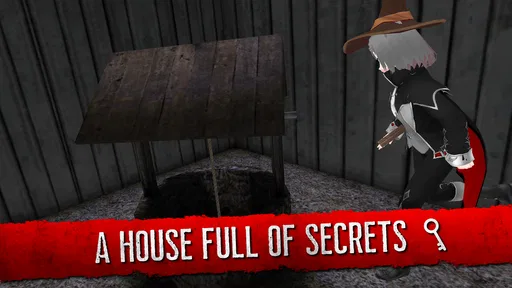
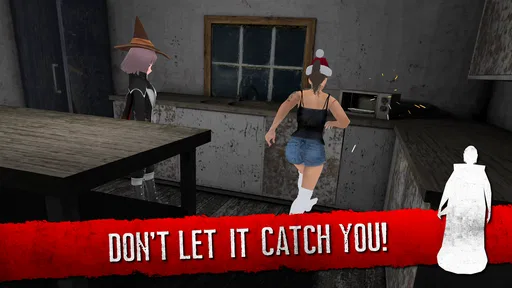
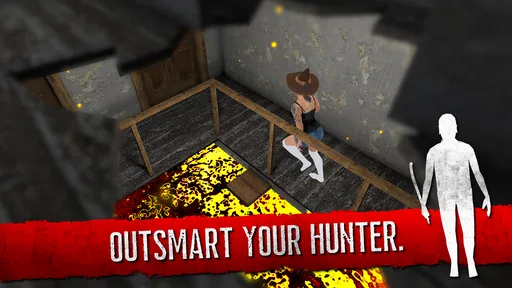
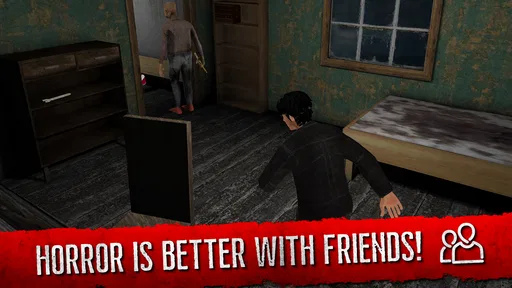
Our Review of Cursed house Multiplayer(GMM)
 Analysis by Appyee
I went into Cursed house Multiplayer expecting a simple escape game, but its appeal is more specific than that. This is a free role-playing game from SUSSY BAKA DEV built around the pressure of getting away from a house that refuses to let you leave. The multiplayer angle changes the mood immediately: the house is not just a place to search through, but a shared problem that becomes much more entertaining when everyone has to react at the same time.
The basic attraction is easy to understand. You enter, look for a way out, deal with the danger around you, and try again when the plan falls apart. That sounds straightforward, yet the best moments come from the space between those actions: the brief confidence after finding something useful, the panic when the route stops feeling safe, and the decision to risk one more attempt instead of quitting. I found it most enjoyable as a short-session game for friends who like suspense without committing to a long, complicated role-playing adventure.
How the escape loop feels in actual play
I pay close attention to what a failed attempt teaches me, because the escape loop is most satisfying when I can turn a confusing moment into a better plan. In the next section, I’ll look at how to keep that learning useful when a session feels stuck, rather than simply repeating the same moves. Small changes in coordination can make a retry feel purposeful.
The first action is simple, but the pressure starts quickly
The first thing I appreciated is that the game does not need a long explanation to establish its purpose. The house is the problem, escape is the objective, and every movement has a practical reason behind it. I am not wandering around simply to admire a setting; I am trying to understand the space well enough to make a safer decision the next time I pass through it.
That makes the opening action feel useful rather than decorative. I look around, test what seems accessible, and pay attention to anything that might help me progress. Even when the immediate result is disappointing, the attempt teaches me something about the house and about how cautiously I need to play. The game works best when I treat each move as part of a plan instead of rushing toward the first interesting object or doorway.
Multiplayer gives this first stage a different texture. With other players involved, the group can divide attention, create distractions through movement, or simply make mistakes together. I found that the strongest sessions were not necessarily the ones where everyone played perfectly. They were the ones where one player noticed a possibility, another player took a risk, and the rest of us had to adjust when that risk did not work out.
There is also a useful social tension in deciding whether to stay together. Moving as a group feels safer because information is shared immediately, but it can also make everyone react to the same danger at once. Splitting up may cover more ground, yet it demands better communication and makes individual errors more costly. That choice gives the opening minutes more depth than the short store description suggests.
Feedback arrives through consequences, not long explanations
The game’s feedback rhythm is built around action and consequence. I try something, see whether it helps or exposes me, and then carry that information into the next decision. This is the part that makes the escape premise work. The house feels threatening because progress is never completely separate from risk; gaining knowledge is valuable, but learning often requires stepping into uncertainty.
When a plan succeeds, the reward is not only advancement. There is a clear feeling that I have understood one more piece of the situation. A useful discovery can change how I view rooms I already visited, while a failed attempt can reveal which habits are making the session harder. I began to play less impulsively after realizing that speed alone does not guarantee a better result.
That rhythm also explains why the game can be more enjoyable with people who communicate well. A teammate can point out a possibility I missed, warn me away from a bad route, or turn a mistake into a shared joke instead of a frustrating defeat. The multiplayer format is at its best when players discuss what they have seen rather than running in random directions and hoping the house solves itself.
One practical tip is to agree on a simple plan before moving too far. Decide who will investigate, who will watch for trouble, and when the group should regroup. This does not require formal roles or complicated strategy. It simply prevents the common multiplayer problem where everyone explores the same area while another part of the house remains unchecked. The small amount of organization makes each attempt feel more deliberate.
The reward is knowledge, progress, and a better second attempt
The most satisfying reward here is the feeling of turning confusion into a workable route. I like games where failure leaves me with something useful, and this one encourages that mindset. Even when I do not escape, I can remember what caused the attempt to collapse, which decisions wasted time, and where the group became separated.
That makes the experience different from a role-playing game focused mainly on character statistics, equipment, or a long narrative campaign. The important improvement is often in the player rather than in a permanent character build. I become more observant, more careful about timing, and more aware of how other players are moving. For some people, that will feel refreshing; for others, it may feel less rewarding than collecting powerful items or unlocking a large skill tree.
The game is a good fit for a quick evening session with friends because the reward arrives in small pieces. A successful escape attempt can feel meaningful, but so can discovering a better way to approach the house. I do not need to spend a long uninterrupted block of time to understand why another round might be worth playing. The previous failure usually leaves behind one unanswered question: what if we had taken the other route, stayed together, or reacted sooner?
There is a trade-off here. Players looking for a deep, traditional role-playing progression system may find the reward structure too dependent on repetition and shared problem-solving. The appeal is not primarily about building an unstoppable character. It is about improving decisions inside a dangerous location. I would recommend it to someone who enjoys learning a tense scenario through attempts, but not to someone who needs constant permanent upgrades to stay interested.
Resetting the session gives failure a purpose
The reset is an important part of the design. When an attempt ends, the experience does not feel completely erased because I carry my understanding into the next run. I know more about the house, I have a better sense of how the group communicates under pressure, and I can change the opening plan instead of repeating it blindly.
I found it helpful to treat the first attempt as reconnaissance rather than as a final test. That attitude reduces frustration and makes the reset feel like a natural part of the game’s loop. The goal is not to perform perfectly from the first minute. It is to notice enough during the failed run that the next one has a real chance to improve.
Still, repeated resets can become tiring if the group does not change its approach. If every attempt follows the same route, the same people make the same decisions, and nobody discusses what went wrong, the loop loses its energy. The game rewards players who use failure as information. It is less satisfying for players who want the game to provide a completely different experience every time without requiring them to adapt.
For an everyday scenario, I can imagine playing it after dinner with two or more friends while everyone has limited time. One person opens the session, the group agrees to stay close for the first exploration, and everyone shares observations instead of racing ahead. After a failed run, the team takes a minute to identify the mistake, then starts again with one clear change. That structure keeps the evening focused and gives each reset a reason.
What makes the multiplayer format worthwhile
The multiplayer element is not just a label attached to a house escape premise. It changes how information is handled. I am constantly deciding whether to trust my own view, follow another player, or ask the group to slow down. A tense moment becomes more memorable when everyone reacts differently: one player wants to investigate, another wants to retreat, and a third has already moved toward a possible solution.
That shared uncertainty is the game’s strongest social feature. It creates stories that would be flatter in a solo experience, even when the underlying objective remains simple. I remember the decisions and arguments more than any single successful movement because the group’s reaction becomes part of the reward.
There is also a downside. The experience depends heavily on the quality of the people playing with you. A cooperative group can make the house feel tense and engaging, while a chaotic group can make it feel like a frustrating race in different directions. Players who prefer complete control, quiet exploration, or carefully paced solo role-playing may be happier with a single-player alternative in the category.
Another useful habit is to communicate discoveries in short, specific phrases. Saying where you are and what you found is more helpful than shouting that something is happening. Clear callouts reduce confusion and make the game feel less random. This is a small player-created technique, but it noticeably improves the flow of a session.
Who should play it, and who should skip it
I would point this toward players who enjoy suspense, cooperative problem-solving, and games that can be understood quickly but improved through practice. It is especially suitable for friends who want a shared challenge rather than a long campaign. The age rating is Everyone 10+, which places it in a broadly accessible range for players who are comfortable with its cursed-house atmosphere.
It also makes sense for people who like repeating a scenario with a better plan. If you enjoy the moment when a confusing location starts to make sense, the loop has enough structure to keep pulling you back. The game’s free entry makes it easy to try without paying upfront, although optional in-app purchases range from $0.99 to $15.99 per item, so I would keep that in mind when deciding how to approach the experience.
I would skip it if you want a story-heavy role-playing game with extensive dialogue, a detailed character-building system, or a large world to explore at your own pace. I would also be cautious if you dislike restarting after failure or if you need every attempt to deliver obvious permanent progress. In those cases, a conventional role-playing game with stronger campaign progression would probably suit you better.
The game can also be a poor match for players who expect multiplayer to solve every problem automatically. Cooperation helps, but it does not remove confusion or bad decisions. The most enjoyable sessions still require patience, attention, and a willingness to learn from a failed escape. That is a strength for the right audience and a barrier for anyone looking for a relaxed, low-pressure experience.
Performance expectations and practical details
On the platform side, the game supports devices running Android 6.0 or later, which makes it approachable for people using older compatible phones as well as newer hardware. I would still suggest closing unnecessary background apps before a multiplayer session, not because the game demands a specific level of performance, but because shared play is less enjoyable when the phone becomes part of the problem.
The current version is 1.7.4, and the game has been available since October 14, 2023. Its reach is substantial, with more than ten million installs, while its average rating sits at 4.2 from around sixty-four thousand ratings. Those figures suggest that the concept has found a large audience, but they do not replace personal judgment: the central question is whether you enjoy a cooperative escape loop built on repeated attempts.
It is free to download, so the sensible approach is to try a few sessions before deciding whether the optional purchases have any value for you. I would not begin by spending money. First, see whether the house, the multiplayer tension, and the reset cycle hold your attention. If the basic loop already feels repetitive, purchases are unlikely to fix that underlying issue.
The developer, SUSSY BAKA DEV, has positioned the game around a very clear idea rather than an overloaded feature list. That focus helps the experience remain easy to understand. At the same time, it means the game lives or dies by the quality of its central loop. There is not much room for the escape structure to feel dull, because nearly every session returns to the same basic pattern of exploring, reacting, failing, and trying again.
My verdict on the action-feedback-reward-reset cycle
After spending time with it, I see Cursed house Multiplayer as a focused cooperative escape game with role-playing classification, not as a replacement for a large traditional role-playing adventure. Its best quality is the way a simple objective becomes more interesting through group decisions. The action is easy to grasp, the feedback comes from consequences, the reward is improved understanding, and the reset gives that understanding a chance to matter.
The loop works when I have people willing to communicate and adapt. It becomes much weaker when everyone rushes independently or repeats a failed plan without discussion. That is the central trade-off: the game offers a strong foundation for shared tension, but the players supply much of the personality and momentum.
My recommendation is straightforward. Try it if you want a free multiplayer challenge that fits short sessions and makes failure useful. Approach it as a game of observation and teamwork, not as a character-power journey. Skip it if you need a deep campaign, a calm solo pace, or constant permanent rewards. For the right group, one failed escape naturally creates the question that matters most: what can we do differently when the house locks us in again?
Verdict
Strengths of Cursed house Multiplayer(GMM)
- Atmospheric horror design creates tension during exploration.
- Multiplayer cooperation makes solving objectives more engaging.
- Different roles can add variety to each match.
- Simple controls make it accessible for new players.
- Short sessions are convenient for quick gaming breaks.
Limitations of Cursed house Multiplayer(GMM)
- Match quality depends heavily on finding active players.
- Unstable connections can interrupt an otherwise tense session.
- Some objectives may feel repetitive after several rounds.
- Dark environments can make navigation confusing at times.
- Limited content may reduce long-term replay value.
Similar Picks in This Category
View All
Hair Dye
CrazyLabs LTD4.4

Monster High™ Beauty Salon
CrazyLabs LTD4.5

Bus Simulator - Bus Games 3D
Jima Apps4.4

Flight Pilot: 3D Simulator
Wildlife Studios4.1


Super Stylist Fashion Makeover
CrazyLabs LTD4.4
Frequently Asked Questions
What is Cursed House Multiplayer (GMM) about?
Cursed House Multiplayer (GMM) is a cooperative horror game focused on exploring a haunted environment, solving puzzles, finding useful items, and surviving supernatural threats with other players. The multiplayer format makes the experience more engaging because teammates must communicate and decide whether to investigate suspicious areas or escape. It is designed for players who enjoy tense exploration, mystery, and jump-scare moments rather than fast-paced traditional action.
Can I play Cursed House Multiplayer (GMM) alone, or is an internet connection required?
The game is primarily designed around multiplayer cooperation, so an internet connection is generally necessary to access its online features and play with other people. Depending on the version and available modes, solo play may be limited or may not provide the same experience as joining a group. Before downloading, check the store listing for current connection requirements, supported modes, and whether private rooms or friend invitations are available.
How does multiplayer work in Cursed House Multiplayer (GMM)?
Players typically enter or create a session and work together while exploring the cursed location. Cooperation is important because teammates may need to search separate rooms, collect objects, unlock doors, and react quickly when paranormal events occur. Voice communication can make coordination easier, although the exact chat options may depend on the current release. A stable connection and players willing to cooperate will provide a much better experience.
Is Cursed House Multiplayer (GMM) suitable for children?
Parents should review the game carefully before allowing children to download it. Cursed House Multiplayer (GMM) uses horror themes, dark environments, frightening sounds, supernatural imagery, and sudden scare effects that may be uncomfortable for younger or sensitive players. Online multiplayer can also involve interaction with strangers, so parental supervision and privacy settings are recommended. Age ratings, permissions, and content descriptions should be checked on the relevant Android or iOS store.
What device requirements and permissions should I consider before downloading?
Because the game includes 3D environments, lighting effects, online sessions, and real-time multiplayer activity, performance can vary between older and newer phones or tablets. A device with sufficient free storage, updated system software, and a reliable Wi-Fi or mobile-data connection is recommended. Players should also review the permissions requested by the app, battery usage, and whether the latest version supports their device before installing it.
Play our best games!


